
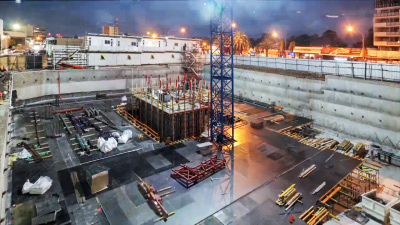
Time-Lapse Cameras with Site Surveillance
We download and compile site images every night to create time-lapse updates. These videos give clients a clear view of construction activity. Should any on-site issues arise, the exceptional clarity of our 45MP cameras allows us to produce cropped edits of any site area for closer next-day inspection.
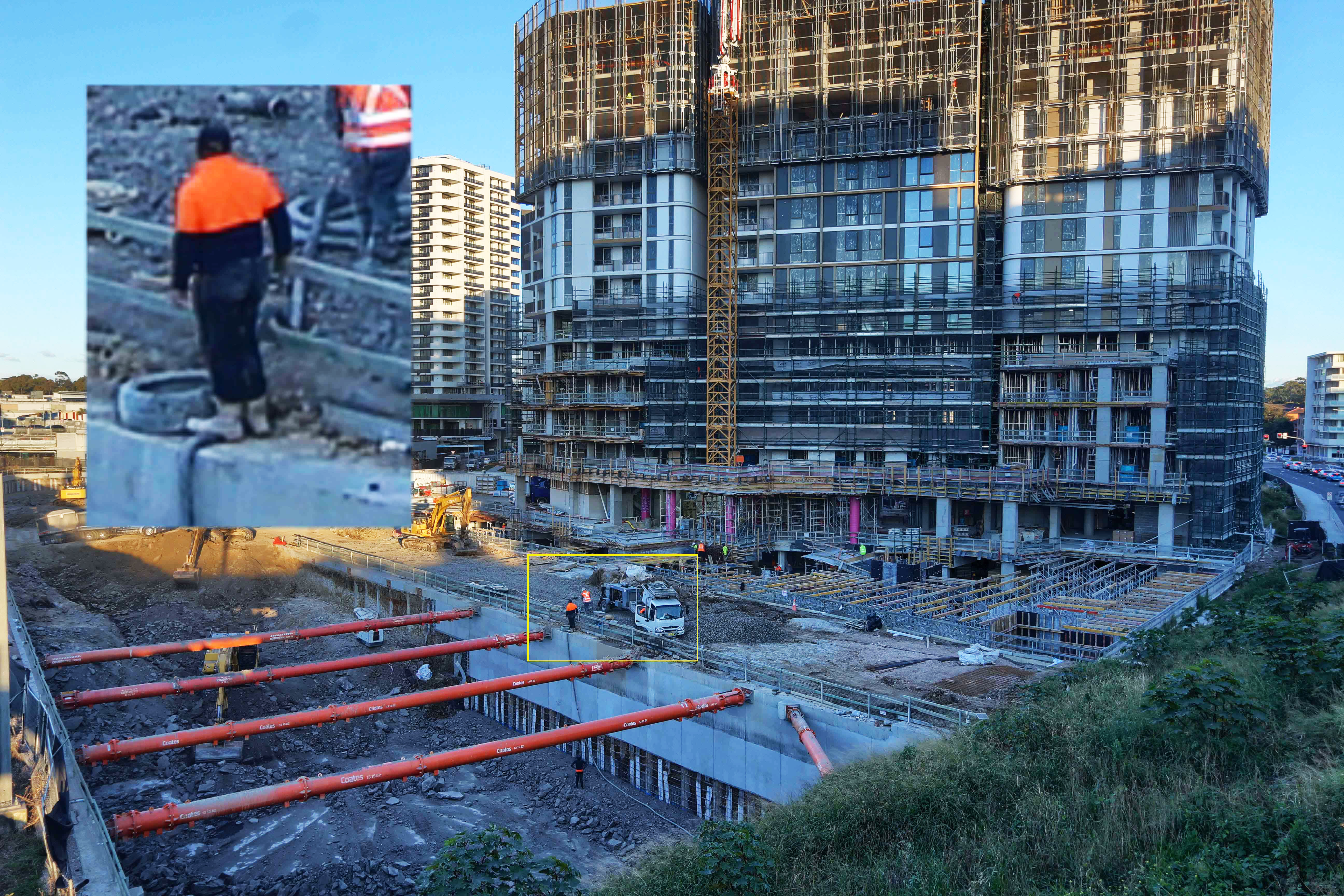
Open full resolution photograph
Live Cameras
Live site cameras give project managers real-time visibility into construction activity. We supply these systems for projects across Sydney and regional NSW, providing a live view of the site to complement their scheduled time-lapse updates.
Time-lapse pricing
APAC BUILD Magazine's
"Time-Lapse Cinematography Specialist of the Year 2026"
Graeme earned the 2026 Time-Lapse Specialist of the Year award from BUILD Magazine for his four-year documentation of the Parramatta City Centre Redevelopment. Over four years, he strategically repositioned three time-lapse cameras as construction progressed, capturing the rise of two major office towers and their courtyards.

His work has also earned multiple accolades from the Australian Cinematographers Society for excellence in time-lapse photography.
Time-lapse Showreel
Watch examples of Electric Films' award-winning construction, civil engineering and infrastructure filming in this short showreel.
(1m 27s)
Our Time-Lapse Filming Solutions
Shooting time-lapse photography comes with unique challenges. Explore this page to discover how Electric Films keeps your projects looking their best.
 Graeme
Beck - Cinematographer
Graeme
Beck - Cinematographer
Time-Lapse and Video Production FAQs
What is included in the monthly fee?
The monthly fee includes camera hire, daily remote surveillance, a progress video, and a site visit each month to check the equipment and clean the lens and solar panel. Regular maintenance is important on dusty construction sites. Site photographs are available anytime.
How are time-lapse cameras maintained?
Time-lapse camera service includes daily remote surveillance and, on long-term cameras, monthly site visits to clean the lens and solar panel and inspect the equipment. Camera positions are reviewed as construction progresses, with relocations discussed with the site manager when a better view becomes available on the Sydney site.
Can clients view images from the cameras remotely?
Yes. Remote access can be provided so project managers can view images from their Sydney or regional construction site on a mobile device. Images are uploaded daily directly to secure Electric Films servers. Project managers should discuss their access needs when planning the camera installation. Photographs are available anytime.
What shooting intervals are used for time-lapse filming?
The interval is tailored to the pace of the work. Long-term construction projects use ten-minute intervals. As construction nears completion, this is adjusted to five minutes to capture stunning day-to-night transitions, showcasing your finished building at its absolute best. For shorter projects lasting a day or two, intervals can be as brief as 30 seconds.
Do the cameras need a nearby power outlet?
No. Our outdoor setups utilise custom-built solar systems, while battery-powered cameras are used for interior filming. This means camera positions never need to be tethered to a power outlet.
What videos do clients receive?
For long-term projects, you will receive monthly progress videos that are a good length for team reviews and sharing. Aerial footage is always included with our drone services.
What is HDR shooting?
HDR stands for High Dynamic Range. At each time-lapse interval, the camera takes three exposures: one normal, one darker, and one brighter. These are combined into a single frame using intensive processing power to retain maximum detail in bright areas and deep shadows.
Are conventional video and still photography services available?
Yes. In addition to time-lapse, Electric Films provides a complete video production service.
Where are time-lapse cameras mounted on construction sites?
Construction cameras can be mounted on rooftops, scaffolding, cranes, street
poles or our custom poles. Street poles provide very useful viewpoints and
allow installation within a day or two; negotiations with building managers
can take longer. Camera positions are carefully selected by our multi-award-winning
cinematographer.
To save your team time, Electric Films arranges all necessary installation
permissions with local councils, power companies, and building management.
What happens if a camera gets bumped or its mounting moves?
Minor camera movement is corrected by stabilising the footage in Adobe After Effects. More significant shifts require realigning the images using a corner pin filter, or physically repositioning the camera. The time-lapse filming guide explains these methods in more detail.
Where repositioning is required, changing the viewing angle by 45 degrees or framing a different subject avoids a jump cut.
Can a time-lapse camera be moved?
Yes. A time-lapse camera stays fixed while recording each sequence, but can be repositioned as the project develops. Moving it at key stages lets us capture the best angles that are more engaging to watch.
How many camera relocations should we budget for?
Camera relocations allow us to track the progression of your site from the best possible angles. While a static setup works for some sites, even small projects look better with changing viewpoints, and larger developments benefit from additional positions. We recommend budgeting for at least two moves. Contact Graeme to tailor the perfect approach for your site.
How is camera movement managed when attached to scaffolding or cranes?
On construction sites, scaffolding and cranes can provide excellent viewpoints, but they naturally move. Videos are stabilised in Adobe After Effects. See an example here.
Can industrial work be filmed overnight or over several days?
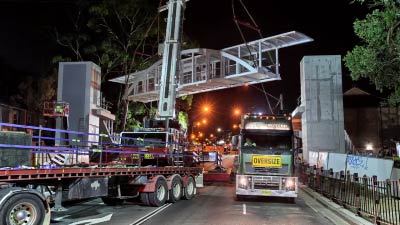
Yes. A number of portable time-lapse cameras can record a specific operation overnight or over a weekend, often alongside long-term cameras documenting the same project. The M2 Freeway Bridge project demonstrates this approach. Project managers can share their work schedules with Graeme so coverage is planned precisely around key stages.